BLUSKY PATIOS · CORONA, CA
WHY IS MY PATIO COVER LEAKING?
Most patio cover "leaks" are not a hole in the cover — water is running off the roof above, bleeding through the wall behind it, or spilling from the front beam. Here's how to find the real source.
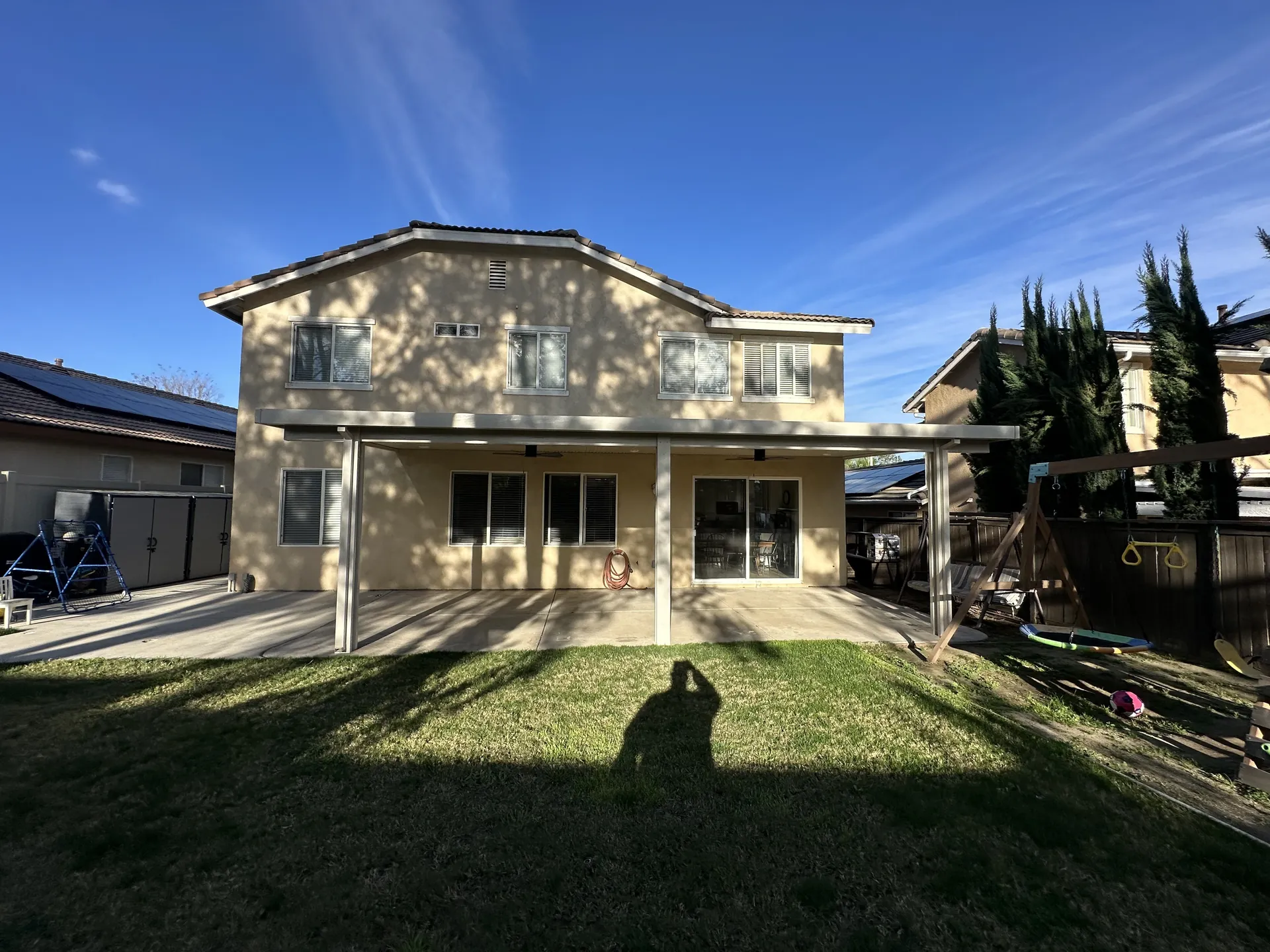
Tap or hover a numbered spot on the photo to see where runoff, ledger wall bleed, and the front beam gutter sit — and what to check first.
The setup behind most of these answers: a solid cover fixed to the house, with a built-in gutter beam along the front.
START HERE: WHERE DO YOU SEE WATER?
Pick the closest match and we will point you to the likely cause.
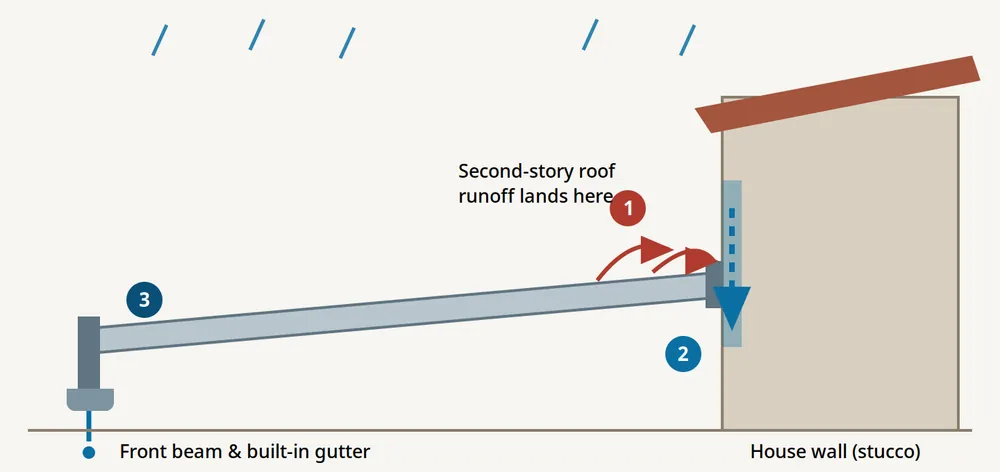
HOW WATER ACTUALLY MOVES
Water rarely falls straight through; it travels along panels, beams and walls until it finds a low point, seam or gap.
FREQUENTLY ASKED QUESTIONS
FIVE CHECKS BEFORE YOU CALL ANYONE
Ten minutes, from the ground and a ladder. Stay off the cover itself.
Clear the gutter beam
From a ladder at the edge of the cover, clear leaves and debris from the built-in gutter that runs along the front beam. Overflow is the #1 cause of fascia drips.
→ If the gutter is damaged, sagging, or pulling away from the fascia, that's a repair job, not a cleaning job.
Look up: is there a house gutter above?
Stand back and look at the roof above the cover. Is there a second-story gutter dumping runoff onto or near the cover? Trace where upper-roof water actually lands.
→ If the upper gutter is clogged or overflowing, clearing it may solve the cover drip without touching the cover at all.
Read the sealant
Look at the joint where the cover meets the house wall. Is the caulk cracked, shrunk, or missing? Is the flashing visible and properly layered under the siding?
→ If the flashing is missing or installed backwards, sealant alone won't hold — the flashing needs to be replaced.
The hose test
On a dry day, run a garden hose along the cover's roof panels and watch where the water travels, then wait 10 minutes and look for drips. Move the hose section by section to isolate the area.
→ If you can't reproduce the leak with a hose, the cause may be condensation — try the test on a cool morning instead.
Note the pattern
Write down: does the drip happen during rain, right after rain, hours later, or only on dry mornings? Does it happen in heavy rain but not light rain? Does it stop when the wind changes?
→ If the pattern doesn't match any of these, or it's getting worse over time, the cover may have a hidden structural issue — call us.
STILL DRIPPING? LET US LOOK AT IT.
Call (951) 577-1798 — tell us where the water shows up, when it happens, and whether there is a roof or gutter above the cover, and we will tell you honestly whether it is a quick seal, a flashing fix, or a bigger job.
Looking for more patio cover resources? Visit our partners at Southern California Patios .
